


1. General Provisions
(1) Background
The year-end and beginning of the year are critical periods for production safety. On one hand, extreme weather events such as cold waves, strong winds, rain, snow, and freezing frequently occur, with low temperatures increasing the risks of material brittleness, seal failures, and pipeline freezing and blockage in special equipment at LNGrefueling stations. On the other hand, some enterprises may overload operations and have fatigued workers on duty to meet production targets, coupled with the seasonal surge in LNG demand, significantly elevating the operational risks of special equipment. To implement the municipal regulatory requirements for special equipment and strengthen LNG Management of Special Equipment Safety at Gas Stations to Prevent Various Safety Incidents and Ensure Safe Production During Critical Periods Development This Guide.
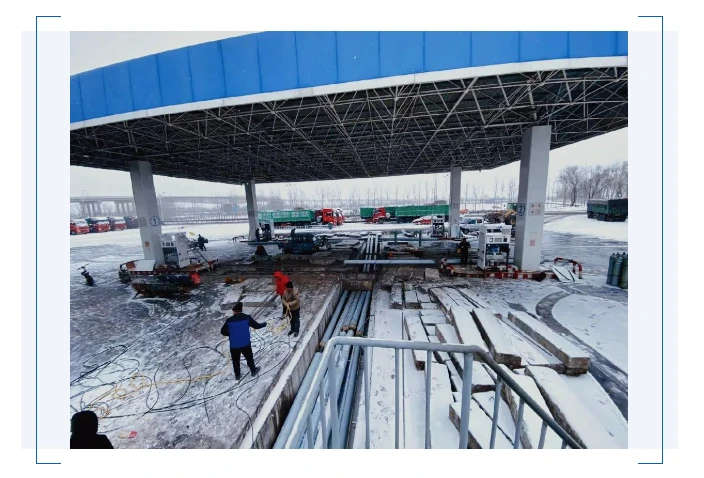
(2) Scope of application
This guide is applicable to the safe operation of the whole process of use, maintenance, emergency response and other special equipment in all types of LNG refueling stations (including oil and gas joint construction stations), covering LNG storage tanks, pressure pipelines, filling equipment, on-board gas cylinders, safety valves, emergency shut-off valves and other main equipment and safety accessories .
(3) Work objectives
Implement safety responsibilities with "the highest standards and strictest requirements" , and achieve the "triple zero goal" by preventing the impact of extreme weather, strictly implementing operating procedures, and strengthening closed-loop management of responsibilities : zero failure operation of special equipment, zero safety accidents, and zero casualties, so as to ensure the smooth operation of LNG refueling stations and the safety of the lives and property of surrounding people.
2. Precautionary measures against extreme weather in winter
(1) Prevention of low temperature and freezing weather
1. Equipment anti-freeze and thermal insulation strengthening: for LNG Conduct a comprehensive inspection of anti-freezing and thermal insulation of key parts such as storage tanks, pressure pipelines, valves, and instrument interfaces to ensure that there is no damage or detachment the insulation effect of safety accessories, pipelines and valves and other frozen parts; Inspect the lubrication and cooling system of the equipment in the station and check the EGA regularly The coolant level and freezing point of the heater avoid freezing and equipment failure .
2. Special inspection of safety devices: go forward to check the safety valve every day , pressure gauge for special inspection If the safety valve is found to have an abnormal starting pressure, immediately stop the operation of the corresponding equipment and report for repair; Carry out antifreeze inspection of safety accessories such as emergency shut-off valves, level gauges, pressure gauges , etc., and completely empty the internal medium when deactivating the equipment to prevent the water pipe and liquid level gauge glass pipe from freezing and cracking.
3. Pipeline operation specification: LNG The storage tank inlet and outlet Before the pre-cooling purge is extended time, slowly open the valve to avoid brittle deformation of the pipeline caused by excessive temperature difference; Regularly check the pipeline supports, and adjust them in time when the displacement is caused by low temperature shrinkage to prevent the pipeline from breaking due to stress concentration; The integrity of the insulation layer should be verified, and if necessary, the surface should be covered with cold-proof materials to prevent the risk of freezing blockage and deformation.
(2) Prevention of windy weather
1. Reinforcement of open-air equipment: Windproof reinforcement of equipment arranged in the open air in the station, check the fastening status of fixing bolts and other connectors, and add windproof pins , ground anchors and other auxiliary fixing devices; In case of strong winds , unloading and filling operations can be suspended .
2. Outdoor operation control: Pay close attention to the early warning information of the meteorological department, and the gust wind reaches when level 6 or above, immediately stop outdoor activities such as high-altitude work and outdoor equipment maintenance; Conduct a comprehensive inspection of the temporary operation sheds, protective fences and other facilities in the station, and dismantle or reinforce them if necessary to prevent accidents caused by falling objects from high altitudes.
(3) Rainy and snowy weather prevention
1. Environmental safety and securityTimely remove ice and snow on equipment surfaces, operating platforms, and inspection channels, lay anti-slip mats, sprinkle snow melting agents, and implement anti-skid and anti-fall measures; Check the drainage system in the station to ensure that rain and snow water are discharged in time to avoid water freezing or backflow into the equipment foundation.
2. Equipment protection measures : Cover the precision equipment placed in the open air with rainproof and snowproof covers to prevent snow melting and infiltration leading to circuit short circuits and component rust; After rain and snow, priority should be given to drying the electrical control system and brake system of special equipment, and the operation can be resumed only after passing the test.
3. Strengthen operational safety requirements at the end of the year and the beginning of the year
(1) Comprehensive inspection before operation
1. Core equipment inspection: daily After taking office , review the pressure, liquid level, temperature and other parameters of the LNG storage tank to confirm that it is within the safety threshold range; Check the pressure pipeline for leakage and frost abnormalities, and use a portable combustible gas detector to detect the valve flange, weld and other leaky parts. If the leakage concentration exceeds the standard, stop the machine immediately for disposal.
2. Safety accessory verification: check the validity period of safety accessories such as safety valves, emergency shut-off valves, pressure gauges, and level gauges one by one. ensure that it is within the scope of verification; Regularly test the response speed of the emergency shut-off valve to confirm that both manual and automatic control methods can be started normally, so as to ensure that the air supply can be quickly cut off in case of emergencies.
3. Auxiliary equipment inspection: check the tire pressure, brake system, and battery status of special motor vehicles in the yard (factory). If necessary, install snow chains, and it is strictly forbidden to drive with illness.
(2) Standardize on-site operation procedures
1. Strictly follow the filling procedures : Before filling, the use registration certificate and inspection certificate of the on-board gas cylinder must be verified to confirm that the gas cylinder is not expired, damaged, or modified; During the filling process, the filling speed is strictly controlled, no overfilling, real-time monitoring of cylinder pressure changes, and immediately stop filling if abnormalities are found.
2. Eliminate illegal operations: It is strictly forbidden to operate and overload special equipment beyond parameters, and the operation process must not be simplified to catch up with the schedule; Operators must wear anti-static work clothes, low-temperature protective gloves and other labor protection supplies, and it is strictly forbidden to use open flames, smoke or carry flammable and explosive materials in the equipment operation area. Eliminate the "three violations" of illegal command, illegal operation, and violation of labor discipline . Maintain a high degree of concentration during the operation, and it is strictly forbidden to work tirelessly or after drinking.
3. Personnel protection enhancement: Equip operators with good warmth and lightweight cold-proof work clothes to avoid limb stiffness affecting operation; Reasonably arrange work and rest time, implement "off-peak operation", Avoid frostbite or operational errors caused by long-term outdoor low-temperature work, and the daily continuous operation time shall not exceed 4 hours.
(3) Emergency preparedness guarantee
1. Plan familiarization and drill: organize all employees to re-study " LNG Leakage Emergency Response Plan", "Fire and Explosion Emergency Rescue Plan" and other special plans, focusing on grasping leakage disposal , fire fighting, personnel evacuation and other key processes; At least one actual combat emergency drill should be carried out before the end of the year and the beginning of the year, simulating filling Leakage, vehicle fire and other scenarios to improve employees' emergency response capabilities.
2. Emergency material reserves: check the emergency material warehouse to ensure dry powder fire extinguishers, explosion-proof tools, protective masks, emergency lighting and other materials are complete and effective, and the quantity meets the maximum risk disposal needs in the station; Supplement cold-proof emergency materials, such as cold-proof clothing and frost-proof gloves etc., to cope with the protection needs of personnel in extreme weather.
3. Smooth emergency communication: Ensure that the emergency telephone, walkie-talkie and other communication equipment in the station have sufficient power and stable signal, and clarify the contact information of emergency contacts and superior authorities; In case of equipment abnormalities or emergencies, stop operations immediately, start the emergency plan as soon as possible and report it, and shall not be late, omitted, or concealed.
4. Risk warning of special equipment
(1) LNG storage tanks
1. Main risk: The low temperature in winter intensifies the brittleness failure of the tank material, and the sealing surface is caused by cold shrinkage leakage LNG spillover; The safety valve freezes and blocks and cannot relieve pressure normally, causing overpressure of the tank. The snow load superimposes the frost heave of the tank foundation, resulting in the tank instability and tilting.
2. Operation points: Check the tank insulation layer regularly every day and pressure and temperature parameters , and stop the machine immediately for maintenance if the insulation failure is found; After heavy snowfall , the storage tank area and passage should be cleared in time Snow accumulation, check the settlement of the foundation, report any abnormalities immediately and take reinforcement measures.
(2) Pressure pipelines
1. Main risks: low temperature shrinkage leads to pipeline deformation and weld cracking; The freezing of residual water in the pipeline causes ice blockage , resulting in local overpressure; The damage of the insulation layer caused the pipeline to freeze and crack, and the LNG leakage caused the combustion explosion.
2. Operation points: Regularly carry out pipelines Inspection , focus on elbows, flanges and other parts, and adjust the deformation in time; Before the pipeline is activated , purge to remove the internal moisture; Strengthen the frequency of inspections, and implement inspections every 1 hour in winter Portable leak detector detects leaks , and immediately investigates abnormal frost formation or sudden temperature changes.
(3) Vehicle gas cylinder filling inspection
1. Main risks: The valve of the on-board gas cylinder is frozen and blocked in winter, and cannot be opened and closed normally during filling; The damage to the insulation layer of the gas cylinder led to the rapid gasification of LNG and the sudden rise in pressure; When driving on ice and snow roads, vehicles slipped and collided, causing gas cylinder leakage.
2. Operational points: Check whether the cylinder valve is frozen before filling, and it can be thawed with warm water; After filling, inform and check the cylinder fixing device to ensure reliable fastening; Drivers are reminded to slow down on ice and snow roads, avoid sudden braking and sharp turns, and install snow chains if necessary to stay away from fire sources and crowded areas.
5. Implementation of safety production responsibilities
(1) Consolidate the main responsibility of safety
Earnestly fulfill the main responsibility of safety, clarify the safety responsibilities of each post, and decompose preventive measures to the post and implement them to the person; Sign a safety responsibility letter, link safety performance with assessment, and implement "zero tolerance" for illegal operations. Seriously investigate the responsibility of relevant personnel.
(2) Strengthen personnel training and education
Organize and carry out the use of special equipment in winter Special safety training, focusing on explaining equipment characteristics, emergency response skills, anti-freezing and anti-skid measures in low temperature environments, etc., to ensure that all employees are proficient in the key points of operation; In view of the characteristics of slackening safety awareness at the end of the year and the beginning of the year, warning education is carried out, and the risk prevention awareness of operators is strengthened through the analysis of typical accident cases.
(3) Strengthen the frequency of supervision and inspection
Implement "daily inspection + special projects" Troubleshooting + homework Safety inspection combined with " spot check" mechanism, the safety management personnel will supervise the operation status of special equipment and the implementation of operating procedures every day; Carry out a special hidden danger investigation once a week, focusing on extreme weather operation and equipment safety ; During the year-end and New Year periods, carry out comprehensive inspections at least twice a month Establish a ledger for the safety hazards found, implement "closed-loop management", and clarify the person responsible for rectification. Rectification measures and rectification time limit, after the rectification is completed, the number can be canceled only after passing the review.
6. Emergency response process
(1) Emergency response to equipment leakage
1. Immediately activate emergency response after discovering an LNG leak Disposal , cut off the leakage source (close the emergency shut-off valve and the outlet valve of the storage tank), notify the surrounding personnel to evacuate to the upwind safe area, set up a warning area, and strictly prohibit irrelevant personnel and vehicles from entering.
2. If the pipeline connection flange leaks, stop the operation of the relevant equipment immediately, close the upstream valve, and tighten the flange ; If the leakage is large, the emergency pressure relief device should be activated to reduce the pressure in the tank to a safe range, and at the same time, call 119 to call the alarm and cooperate with the fire department to deal with it
3. During the leakage disposal process, operators must wear a full set of low-temperature protective equipment, and it is strictly forbidden to use non-explosion-proof tools to avoid electrostatic sparks and prevent LNG Gasification causes a combustion explosion.
(2) Emergency response to fire accidents
1. After a fire, immediately stop all operations, cut off the air source and power supply, and organize the evacuation of personnel; Use dry powder fire extinguishers to aim at the root of the fire source to extinguish the LNG fire, and it is strictly forbidden to directly extinguish LNG fires with water.
2. If the fire is large and uncontrollable, immediately call the 119 fire alarm number, explain the location of the accident, the leaking medium, and the fire situation, and report it at the same time gas authorities and special equipment supervision section of the Municipal Supervision Bureau; The on-site personnel evacuated to a safe area and cooperated with the fire department to carry out rescue.
(3) Emergency response to equipment failures
1. Special equipment failure (such as safety valve freezing blockage, pipeline freezing cracking, pressure gauge level gauge ). failure, etc.), immediately stop the operation of the equipment, cut off the relevant power supply and air supply, and set up warning signs to prevent irrelevant personnel from approaching.
2. Organize technical personnel to investigate faults, formulate maintenance plans, and strictly prohibit unauthorized disassembly of core components of special equipment; Strictly abide by the safety operation procedures during the maintenance process, and resume operation only after the maintenance is completed and qualified after the inspection; If the fault cannot be repaired in time, it should be immediately deactivated and reported to the relevant departments, and then put into use after the professional institution has passed the maintenance.


